What a 24/7 Control Room Teaches About Calm Leadership
A Master Control Room never closes, never pauses and never gets a second take. Here is what running live transmission at Channel i has taught me about staying calm, and helping a team stay calm, when the stakes are on air.


There is a particular silence in a Master Control Room when something goes wrong. The monitors are still bright, the clocks still tick, but every person in the room is suddenly listening for one voice: the one that says what happens next.
I work in transmission at Channel i, where the MCR runs every hour of every day. Over hundreds of live broadcasts I have learned that technical skill keeps a channel on air, but calm is what keeps a team working well enough to use that skill. This post is about what calm leadership actually looks like in a room where the clock never stops.
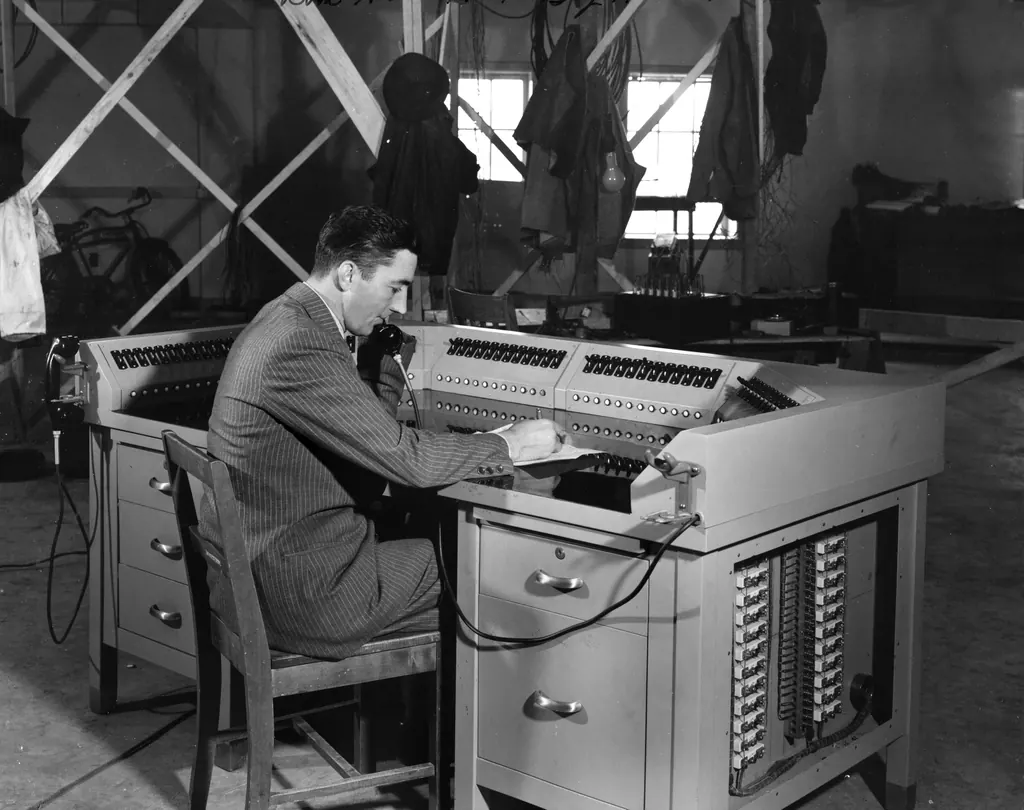
Photo: Operators Desk K-25 & K-27 by usdoe, CC0, via rawpixel.
Calm is not a personality. It is preparation.
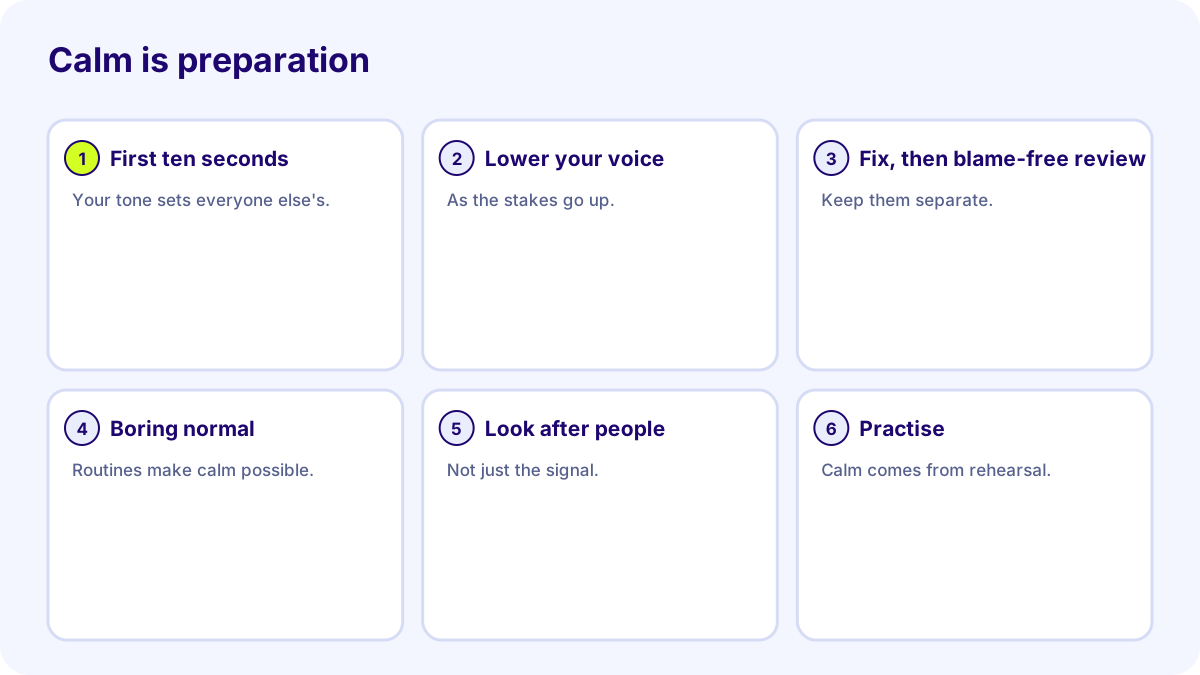
People sometimes describe a good MCR operator as “naturally calm”. I don’t think that’s true. Calm is mostly the visible result of three invisible things:
- You have seen this failure before, in a drill, a checklist or a previous shift.
- You know your first move without thinking about it.
- You trust the people beside you to do their part.
When those three exist, a fault becomes a sequence of steps. When they don’t, the same fault becomes panic. So the leader’s job begins long before the incident: rehearsing failovers, writing clear runbooks, and making sure every person knows what “normal” looks and sounds like.
The first ten seconds set the tone
In a live incident, the room copies the first person who speaks. If that voice is loud and rushed, everyone rushes. If it is clear and steady, people steady themselves.
The habit I try to keep is simple:
- Say what you see, not what you fear. “Main feed is frozen on monitor three” is useful. “Everything’s gone!” is not.
- Say the first action and who owns it. “I’m switching to backup. You check the encoder.”
- Say when you will update. “Give me thirty seconds, then I’ll tell you where we are.”
That last one matters more than it sounds. People panic when they don’t know what’s happening. A promised update gives them permission to focus on their own task.
Lower your voice when the stakes go up
This sounds like advice from a parenting book, but it works in broadcast. When pressure rises, I deliberately speak more slowly and a little more quietly. It forces me to think before I talk, and it signals to everyone else that we are still in control.
Calm leaders are not the ones who feel no stress. They are the ones who don’t hand their stress to the team.
Separate the fix from the blame
During an incident, there is only one question: how do we get the right picture back on air? Who caused it, why it happened and what we change are all important, but they belong to later, in a blameless post-mortem.
If someone feels they are being judged in the middle of a fault, they hide information. In a control room, hidden information is the most dangerous kind.
Make “normal” boring, on purpose
The calmest shifts are not the ones with no problems. They are the ones where routine is so well practised that a problem stands out immediately. That means:
- The same start-of-shift checks, every time.
- The same way of logging events and changes.
- The same handover routine between shifts.
Boring routine frees attention. When nothing surprises you in the normal flow, you have energy left for the real surprise.
Look after the people, not just the signal
A 24/7 operation runs on tired humans. Night shifts, festival schedules, election nights and long cricket coverage all wear people down. Leading calmly includes noticing when a colleague is exhausted, covering a break, or simply saying “good catch” after someone spots a problem early.
Teams that feel looked after report problems sooner. Teams that feel watched report them later.
What this means outside a control room
You don’t need an ON AIR light to use these lessons. Any team with real deadlines (a newsroom, a design studio, a product launch, an event) faces moments where everyone looks at one person. The same rules apply:
- Prepare so that calm is possible.
- Speak first, clearly and slowly.
- Fix now, learn later.
- Make routine boring so surprises are obvious.
- Look after the people who keep things running.
A control room taught me that leadership is mostly invisible when it works. Nobody watching the channel at home will ever know a fault happened. That is exactly the point.
Summary
- Calm is prepared, practised and expected, not a trait.
- The first ten seconds of a fault set everyone’s tone.
- Lower your voice as the stakes go up.
- Fix first; review later without blame.
- Make normal routines boring and look after the people.
Broadcast engineer at Channel i, brand and social media designer, and maker of offline-first apps for Bangladesh.
See my work